
Should You Join Toastmasters If You're Afraid of Public Speaking?
November 9, 2026
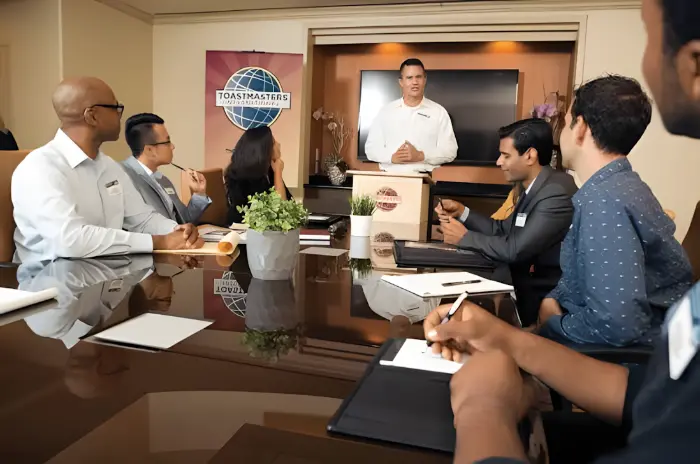
Yes. If you're afraid of public speaking, joining Toastmasters is one of the best decisions available to you — and the common criticism of it isn't a good reason to stay away.
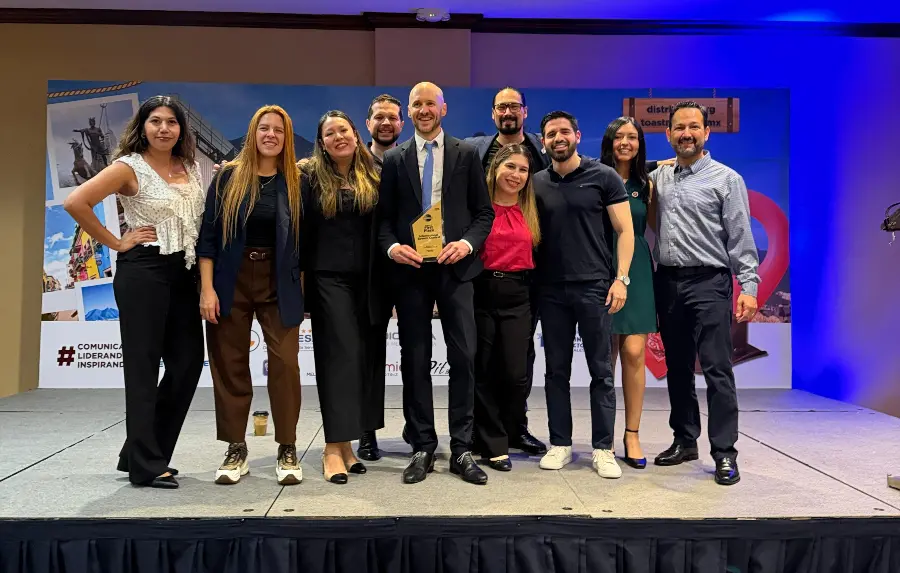
My bias is on the table: I'm a member, and I won a District Toastmasters International Speech Contest. Here's the reasoning anyway, including the part that usually gets left out.
Why It Works: Fear Is a Repetition Problem
Imagine you had to speak in front of a group every single day.
The first week would be awful. The second would still be genuinely stressful. But by the third, your brain and body start getting used to the feeling, and it becomes manageable. By week ten you'd probably still feel some pressure walking up — but nothing overwhelming. Just a bit of charge, the way you feel before any moderately important thing.
Nothing about you would have changed except the number of times you'd done it.
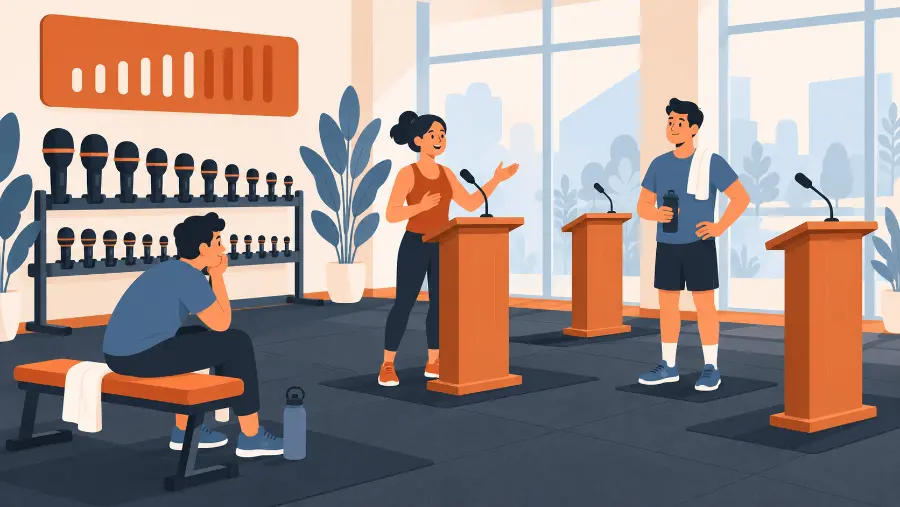
That's the whole mechanism. The fear of public speaking is mostly a lack of reps, and reps are the one thing a club reliably supplies. Toastmasters is a gym for speaking in public — scheduled, structured, with other people expecting you to show up. The structure is the value. Everyone intends to practice more; almost nobody does it alone without something on the calendar.
The "It Makes People Robotic" Criticism
Some Toastmasters speakers end up sounding formulaic — hitting the same structural beats, using the same gestures, losing whatever was natural about how they talked. And honestly? It's true for some people. I've seen it.
But look at what it's actually a critique of. It's a critique of an intermediate speaker's style. It's a problem you get to have after you're already able to stand up and deliver.
If you're afraid of public speaking today, you are not choosing between natural and robotic. You're choosing between speaking and not speaking. And I'd far rather sound slightly formulaic and be able to get through a talk than sound perfectly natural in theory while being too terrified to articulate a full sentence in practice.
Get fluent first. Get natural second. The order isn't optional, and worrying about step two is a strange reason to skip step one.
The Real Criticism: Some Clubs Handle a Breakdown Badly
The robotic thing isn't the real problem with Toastmasters. This is.
Sometimes someone stands up and it comes apart. The voice goes. The tears come. They stop mid-sentence and sit back down. And plenty of clubs genuinely don't know what to do with that moment — the room goes quiet in the wrong way, the evaluator tiptoes around it, and nobody says the thing that would actually help.
So let me say it here, in advance, in case it ever happens to you: it is completely fine. It happens more often than anyone admits, it says nothing about you, and it is not a sign you shouldn't be there. If anything it's a sign you turned up for the hard thing instead of avoiding it.
I've seen it happen. And I've seen what people do next, which is the part that actually causes damage: they never come back. That's the worst possible move, because you've closed the file on a bad note — the last thing your body knows about speaking in public is that it went wrong and you left. The fear doesn't stay where it was. It grows.
So don't let the meeting end there. Ask the Toastmaster running the meeting whether you can come back up for thirty seconds before the close. Thank the room. Say one sentence about anything at all. Thirty seconds is plenty — this isn't about delivering a better speech, it's about making sure the last memory is you standing up there and getting through it.
And if you can't face going back up that night, that's fine too — don't turn this into one more thing you failed at. It's just reps. You get another go next week. Maybe you'll panic again. Maybe you'll cry again. It still counts, every single time, because each one moves you closer to the week where you don't panic, don't cry, and just deliver the thing like it's nothing.
Then come back next week.
The reframe that makes this manageable is the one from earlier: treat the club like a gym.
Nobody walks into a gym on week two expecting to lift well. You're not there to be impressive. You're not there to be awesome. You're there to put in reps, and reps count whether they're good or bad. A bad speech builds the same tolerance as a good one — arguably more.
So it almost doesn't matter how it goes. What matters is:
- Show up. Every meeting, even the weeks you'd rather not.
- Speak as much and as long as you can. Not just the prepared speeches — take the roles. Timer, Ah-Counter, Grammarian, Topicsmaster. They're all time on your feet in front of the room.
- Add the minutes to your total. That number going up is the actual measure of progress, not how any single speech felt.
- Come back next week and do it again.
That's the whole method. Everything else is detail.
What You Actually Get Beyond the Speaking
For me Toastmasters turned out to be much more than a public speaking club, and this is the part I'd underweighted before joining.
You meet people who are actively trying to improve themselves — and who were humble enough to walk into a room and admit they weren't good at something yet. That's a rarer group than you'd think, and it's a good room to be in regardless of what you came for.
Then there are the skills that look like speaking skills but turn out to be general-purpose:
- Cutting your filler words. Once the ums are gone you're ahead of nearly everyone in any meeting, for the rest of your career.
- Giving feedback. The club trains you to evaluate someone's work usefully and kindly, out loud, on the spot. Almost nobody is good at this.
- Receiving feedback without flinching, because it happens to you every meeting.
- Thinking on your feet, from Table Topics — the impromptu segment where you're handed a question and have two minutes to answer it.
Those compound in your day-to-day life in a way that has very little to do with standing on a stage.
So Join. But Don't Wait to Start.
The honest caveat: a club meets roughly twice a month, and you won't speak at every meeting. That's a slow rep count for someone who wants the fear gone.
So join — and in between, keep practicing. The two work much better together than either does alone, and the practice is what lets you show up to a meeting already warmed up instead of starting from zero each time.
If a club isn't an option at all right now — nothing nearby, wrong night, no time, or you're simply not ready to walk in yet — that's a real situation and it's solvable: what to do if you can't join a Toastmasters club.
A Toastmasters Club in Your Pocket

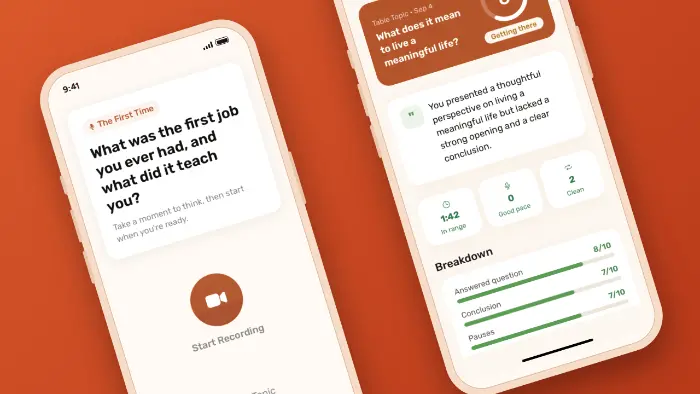
That gap between meetings is what I built ToastUp for.
It's a Toastmasters club in your pocket — and I mean that fairly literally, because it's built out of the meeting roles you've just read about:
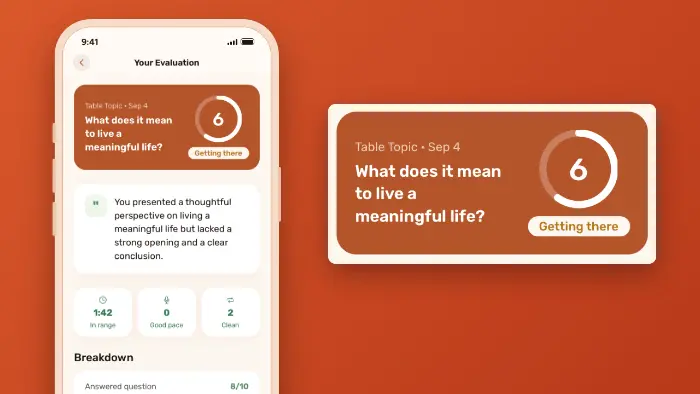
- The Table Topics Master — it hands you a question you didn't see coming, and you have two minutes
- The Ah-Counter — every um, uh and you know, counted, every single rep
- The Timer — your length and your words per minute, so you know whether you really slowed down
- The Evaluator — a score across 10 metrics, and the specific line that fell flat with a better version of it
Table Topics is the heart of it on purpose. It's the segment of a meeting that builds the most confidence per minute: a question out of nowhere, two minutes, no script, no preparation to hide behind.
What it can't do is the half of a meeting that's made of other people. There's no room reacting to you in real time. Nobody claps. You don't get to evaluate someone else's speech, which is where a surprising amount of the learning actually happens. And you don't walk out having met anyone.
So it isn't a replacement, and I'd rather say that plainly than pretend otherwise. Go to the club. Use this on the thirteen days a fortnight when there's no meeting — so that when you do walk in, you arrive warmed up instead of starting from zero.
Limits, stated plainly: it needs camera and microphone access, and you get one free evaluation before it asks you to subscribe. Your video never leaves your device — only the audio is sent out, to transcribe and score the speech.