
What Is the 20-20-20 Rule? A Complete Guide
March 2, 2026

Every 20 minutes, look at something 20 feet away for 20 seconds. That's the 20-20-20 rule — the simplest, most evidence-backed way to prevent digital eye strain. The American Optometric Association recommends it. Ophthalmologists recommend it. And yet almost nobody actually does it.
The problem isn't knowledge. It's follow-through.
Where the 20-20-20 Rule Comes From
The rule was popularized by California optometrist Dr. Jeffrey Anshel as part of his research on computer vision syndrome. The logic is straightforward: when you stare at a screen, your ciliary muscles (the tiny muscles that control your lens focus) lock into a near-focus position. After 20 minutes of sustained near work, those muscles fatigue. Looking 20 feet away forces them to relax. Twenty seconds is the minimum time needed for that relaxation to take effect.
The American Optometric Association (AOA) and the American Academy of Ophthalmology both endorse the rule as a first-line defense against digital eye strain.
The Science Behind It
A 2023 study published in the Nepal Journal of Ophthalmology found that participants who followed the 20-20-20 rule reported significantly fewer symptoms of eye strain — including dry eyes, headaches, and blurred vision — compared to a control group.
Separate research from the University of Alabama at Birmingham found that blink rate drops by as much as 66% during screen use. The 20-20-20 rule forces you to look away and, critically, to blink naturally again.
The numbers are stark: the AOA estimates that over 50 million Americans experience digital eye strain symptoms. Most of them know about the 20-20-20 rule. Almost none follow it consistently.
Why Most People Fail at the 20-20-20 Rule
If the rule is so simple, why doesn't everyone do it?
You forget. That's the entire problem. When you're deep in a spreadsheet, writing code, or doomscrolling, 20 minutes evaporates. Nobody is sitting there with a mental stopwatch.
The common advice — "set a phone timer" — fails for three reasons:
- You have to set it manually every single time
- Phone notifications are easy to dismiss (your brain is already wired to swipe them away)
- It interrupts your flow with an aggressive alarm that doesn't belong in a focused work session
What you need is something that runs automatically, reminds you gently, and doesn't break your concentration.
How Lumo Automates the 20-20-20 Rule on Mac
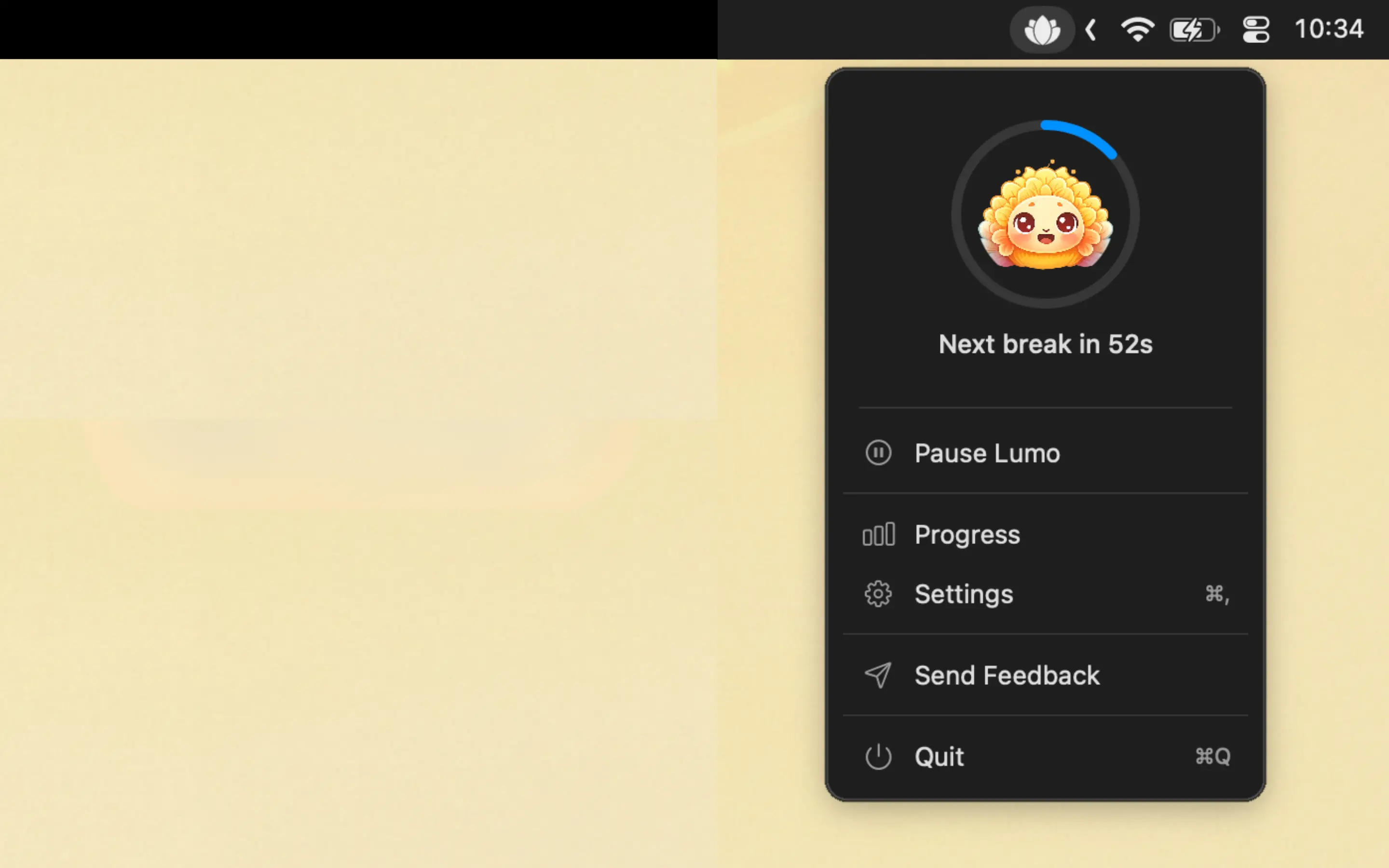
Lumo is a macOS menu bar app built specifically around the 20-20-20 rule. It runs quietly in your menu bar and nudges you every 20 minutes with a non-intrusive reminder to look away.
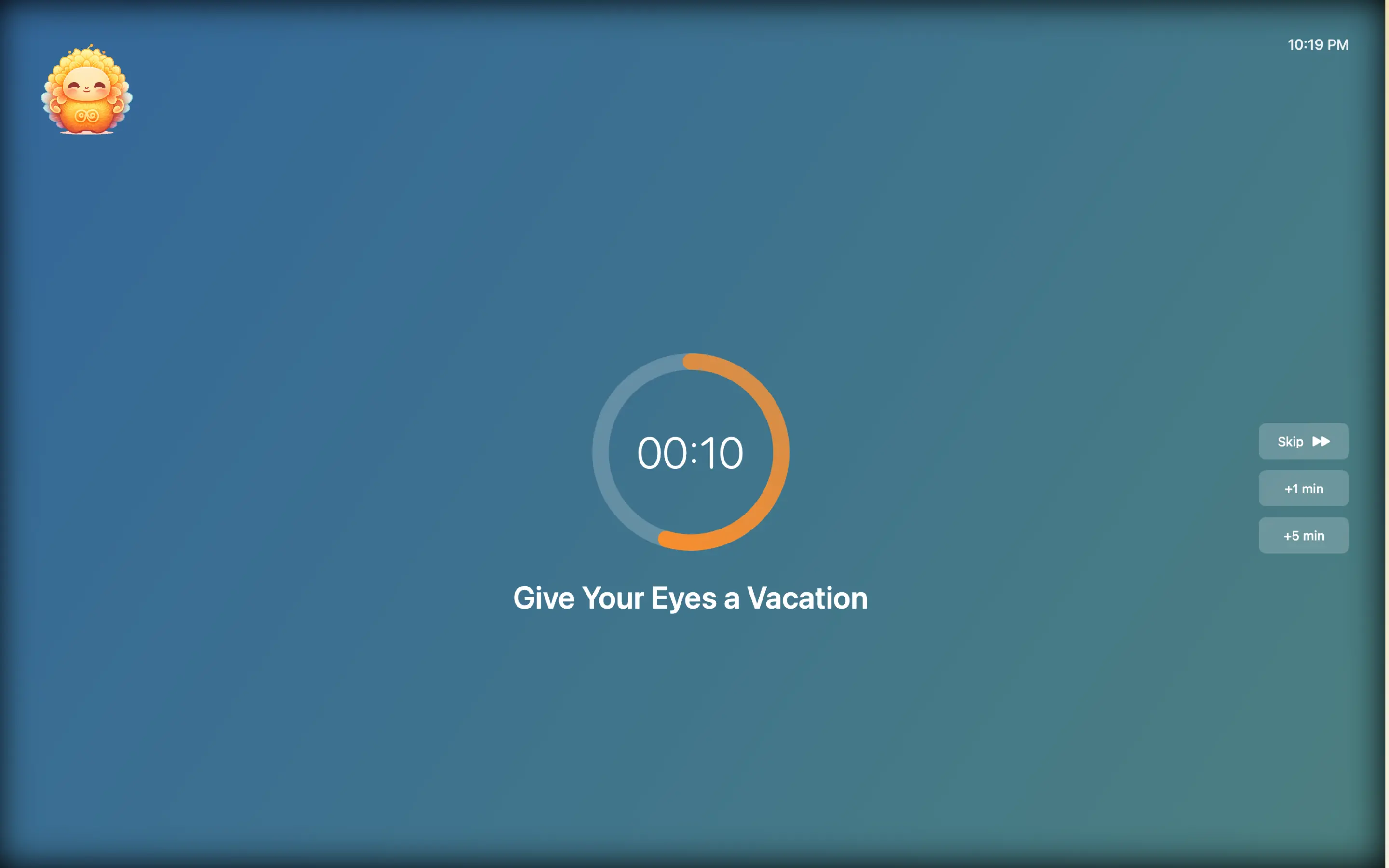
Here's what makes it different from setting a timer:
- It's automatic. Lumo starts with your Mac and runs all day — no manual setup
- It's non-intrusive. A gentle reminder, not a blaring alarm. You can skip it if you're mid-thought
- It tracks your progress. A lotus flower visualization fills in as you complete breaks throughout the day, giving you a visual reward for staying consistent
- It pauses when you're away. Lumo detects inactivity and pauses automatically — no pointless reminders when you're already on a break
- It includes breathing reminders. Lumo is the only Mac app that pairs the 20-20-20 rule with periodic breathing exercises, addressing both eye strain and the shallow breathing that comes with prolonged screen use
Weekly and monthly analytics let you see your streak and stay motivated over time — not just for a day, but for months.

Tips to Make the 20-20-20 Rule Stick
Even with an app doing the heavy lifting, a few environment tweaks help:
- Position your monitor at arm's length — about 25 inches from your eyes
- Place your screen slightly below eye level — this reduces the exposed surface area of your eyes, slowing tear evaporation
- Pick a "20-foot target" — a window, a wall, a plant across the room. Having a default focal point means you don't waste the 20 seconds deciding where to look
- Combine breaks with blinking — deliberately blink 10 times slowly during each 20-second break to re-coat your eyes
Frequently Asked Questions
What is the 20-20-20 rule?
The 20-20-20 rule is a simple guideline to prevent digital eye strain: every 20 minutes, look at something 20 feet away for at least 20 seconds. It was popularized by optometrist Dr. Jeffrey Anshel and is recommended by the American Optometric Association.
Does the 20-20-20 rule actually work?
Yes. A 2023 study in the Nepal Journal of Ophthalmology found that participants who followed the rule experienced significantly fewer symptoms of digital eye strain, including dry eyes, headaches, and blurred vision.
How do I remember to follow the 20-20-20 rule?
The most effective way is to use an automated reminder app like Lumo, which runs in your Mac menu bar and prompts you every 20 minutes. Phone timers and sticky notes fail because they require manual effort and are easy to dismiss.
Is the 20-20-20 rule enough to prevent eye strain?
It's the single most effective habit, but combining it with proper monitor distance (arm's length), good lighting, and regular blinking helps even more. Lumo combines the 20-20-20 rule with breathing reminders for a more complete approach.
The 20-20-20 rule works. The only hard part is remembering to do it. Lumo solves that.